Training, Technique & Workouts
Women's Treadmill Workouts: Boost Bone & Hormone Health
30th Nov•6 min read
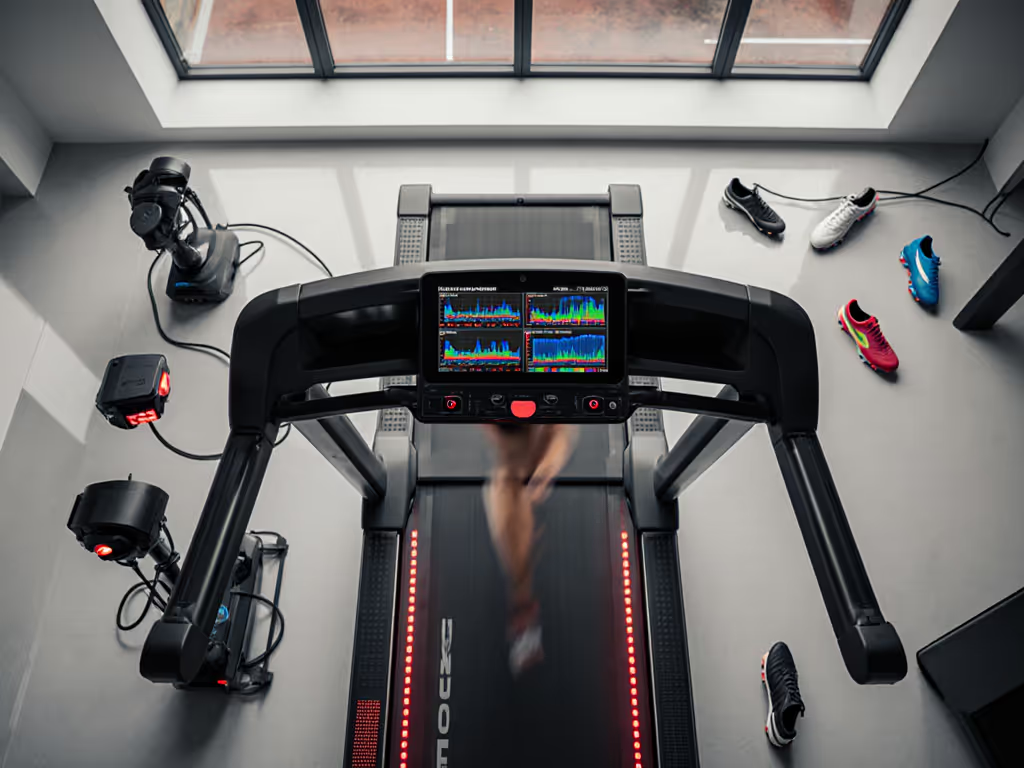
When your training mimics the movement patterns of your sport, sport-specific treadmill training becomes more than just cardio, it's strategic preparation. Yet too many athletes compromise their form on machines that don't match their actual field sport treadmill workouts. Comfort and safety aren't luxuries; they're prerequisites for consistent training that builds performance without inviting injury. For a practical checklist of must-use features and fall-prevention steps, see our treadmill safety guide. A back-rail scrape once ended my tempo mid-stride (a painful lesson in how mismatched equipment writes checks your body can't cash). Your stride writes checks; the deck must cash them.
Field sports demand varied movement patterns that generic treadmills rarely accommodate. Soccer agility requires rapid direction changes, basketball conditioning needs explosive lateral transitions, and football speed work demands unhindered forward explosiveness. Each sport's biomechanics dictate specific spatial requirements on the treadmill:
Your stride writes checks; the deck must cash them.
An often-overlooked metric is the "effective running envelope", the combined space needed for your natural stride at competition speed plus 20% margin for fatigue. Many treadmills with 60-inch belts fall short for athletes over 5'10" during high-intensity sport-specific interval training, forcing shortened gait patterns that transfer poorly to field performance. If you're over 6'2", our best treadmills for tall runners guide verifies deck lengths and stability for long strides at speed.
Most manufacturers tout belt length as a single number, yet the effective running surface varies dramatically based on:
I've measured identical 60-inch belt machines where the practical running area ranged from 48 to 56 inches, enough difference to determine whether a 6'2" athlete can maintain natural mechanics during football speed ladder treadmill drills. The critical measurement? "Clear stride length": the distance between where your back foot pushes off and front foot lands at race pace.
This is where my tall-runner perspective became universal. When I started measuring effective running area for friends of every height, I discovered something counterintuitive: shorter athletes often need proportionally longer decks relative to their stride length to maintain balance during direction changes. A 5'4" soccer player executing agility drills may require 54 inches of clear space (nearly her entire height), while a 6'0" runner might need 60 inches for the same movement pattern.
Rather than guessing based on height charts, take these precise measurements:
Add 15% to your maximum measurement for your minimum required belt length. Then verify this against the treadmill's effective running area (not just the belt dimension). Many models lose 4-6 inches of usable space at top incline due to deck mechanics.
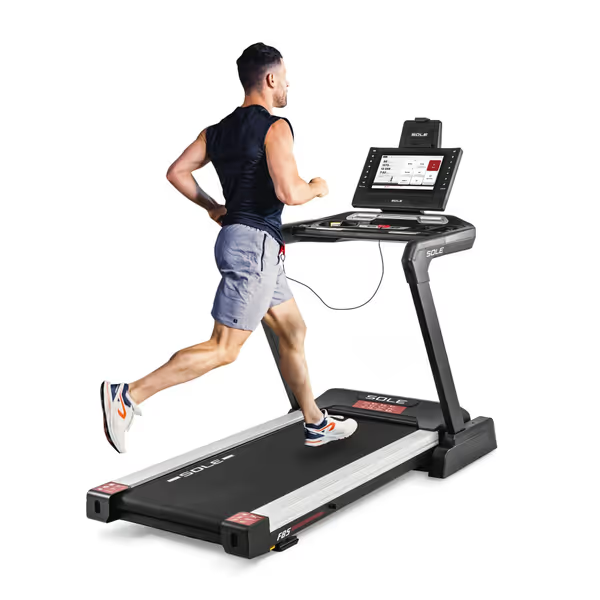
The Sole F85 demonstrates how thoughtful design accommodates this reality. Its 60-inch belt maintains 55 inches of clear running area even at 15% incline through strategic rear roller placement and recessed motor housing (critical for athletes implementing soccer agility treadmill drills requiring full-stride accelerations).
Stability metrics matter more than speed ratings for injury-proof training:
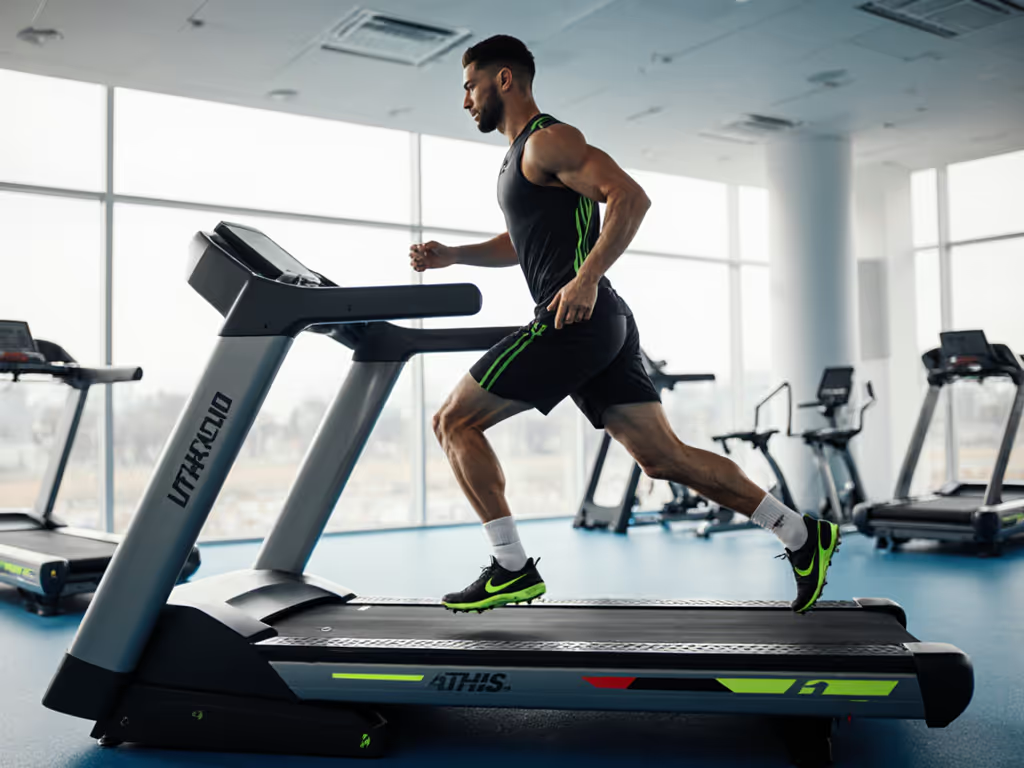
I've seen runners develop knee pain from "premium" cushioning that creates a trampoline effect (soft at initial contact but rigid at push-off). For evidence-based picks and incline settings that reduce joint load, see our treadmill for knee pain guide. True joint protection comes from precise, even compression throughout the gait cycle. Look for treadmills with graduated cushioning profiles rather than single-density decks.
For basketball conditioning treadmill work involving frequent stops and starts, handrail geometry proves equally critical. The optimal grip height sits 2-3 inches below iliac crest, with vertical rails that don't force unnatural wrist angles during defensive slides. Many runners develop wrist strain from gripping horizontal rails during extended sessions, another hidden injury risk.
Don't let marketing specs override your body's feedback. When I measured the first compact machine that safely fit a 6'4" stride, I realized ergonomics, not entertainment features, are the true measure of quality. The quiet consistency of pain-free training beats flashy consoles every time.
Fit before flash isn't just my mantra, it's your injury prevention protocol. Before your next sport-specific treadmill training session, take five minutes to verify your equipment accommodates your natural mechanics. Record your stride at increasing intensities, then compare against your treadmill's usable space. If you're consistently landing within 6 inches of the front or rear edges, you're compromising form and inviting injury. Measure, adjust, and protect your most valuable athletic asset: your body's ability to move without limitation.