
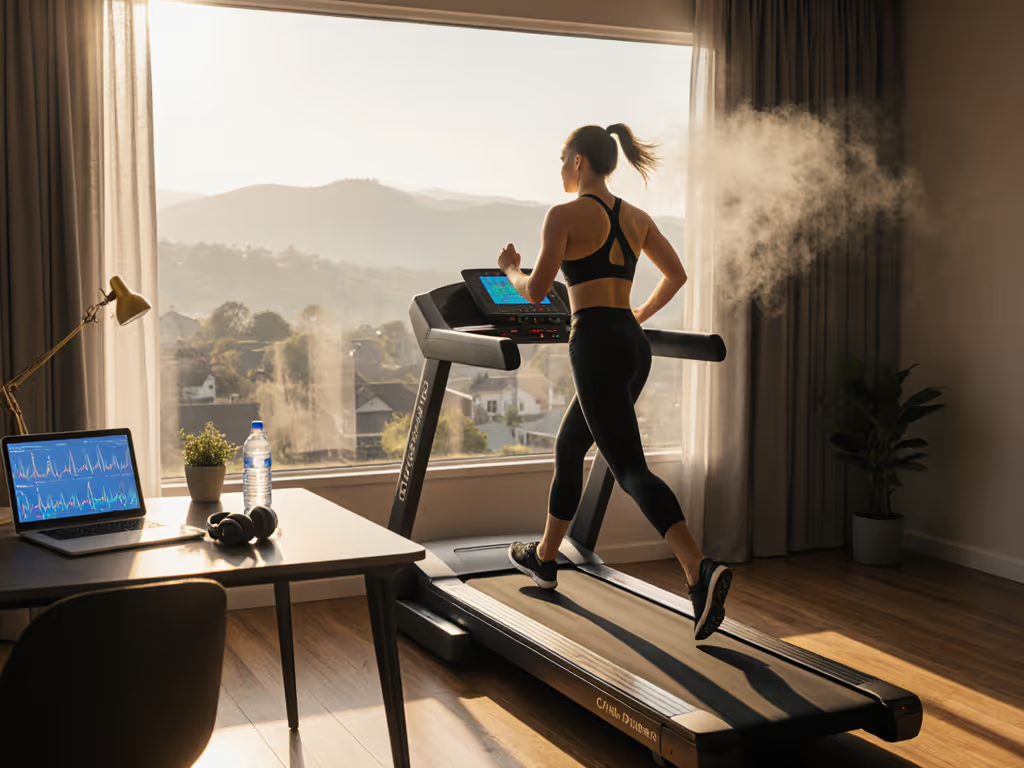
Treadmill Protocol for Fibromyalgia: Low-Impact Pain Relief
By Jamal Okoye • 11th Jan
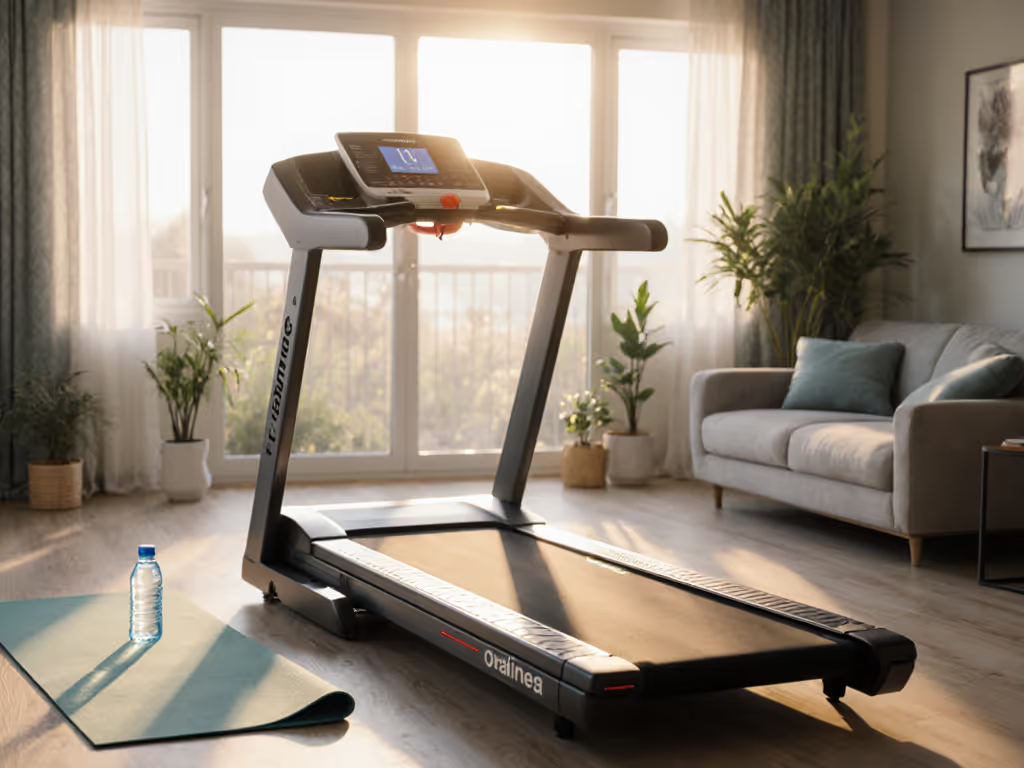
When chronic pain and fatigue dominate your life, finding safe movement options feels impossible. But a well-planned treadmill fibromyalgia protocol offers something rare: predictable, controlled exercise that won't aggravate tender points. Pair this with a low-impact treadmill for chronic pain designed for smooth operation, and you've got a tool that sidesteps common triggers like uneven sidewalks or weather disruptions. I've seen too many clients abandon exercise because their equipment fought them (wobbly decks, jarring impacts, or sudden shutdowns). Let's fix that.
As a former mobile tech who now writes preventive care guides, I know this truth: maintenance is mileage. A properly tuned treadmill won't vibrate your joints raw or sputter out mid-walk. It's the difference between "I can't" and "I did." Preventive care beats warranty claims nine days out of ten.
How do I start a treadmill protocol safely with fibromyalgia?
Begin absurdly small. Studies show fibromyalgia protocols work best when starting at 5-10 minute sessions, 2-3 days weekly. That's not a typo. Pushing harder triggers the "boom-bust cycle": temporary gains followed by days of increased pain.
Your first month should focus on consistency, not duration:
- Week 1: 5 minutes, speed 1.0-1.5 mph, zero incline
- Week 2: 8 minutes, same speed
- Week 3: 10 minutes, 1.5-2.0 mph
Always warm up with 3 minutes of seated marching or arm circles before stepping on the belt. Never skip this. It preps your nervous system.
Key data point: A 2022 meta-analysis in Rheumatology International found protocols under 30 minutes reduced pain flares by 37% compared to longer sessions. Your treadmill's stability and belt smoothness directly impact this. If your machine groans or jerks, it's fighting you (not helping). If you're new to treadmills, skim our first-time treadmill safety guide before your first week.
How do I manage fibromyalgia fatigue during treadmill sessions?
Break it into micro-sessions. Fatigue isn't laziness, it's a neurological response. Try this "3x10" strategy:
- Walk 3 minutes
- Stop belt (don't dismount)
- Rest 60 seconds while breathing deeply
- Repeat twice
Total: 10 minutes of movement with rest built in. This aligns with the 150-minutes-per-week aerobic goal recommended by the Fibromyalgia Fund, but in manageable chunks. Track your energy before and after using a 1-10 scale. If post-workout fatigue spikes more than 2 points, cut session time by 25% next time.
Does treadmill temperature regulation matter for fibromyalgia?
Critically. Temperature sensitivity amplifies pain in 70% of fibromyalgia patients. A poorly ventilated motor or friction-heated belt adds unwanted thermal stress. Before stepping on:
- Check the deck surface with your palm. It should feel cool, not warm. Heat increases inflammation.
- Ensure airflow around the machine. Never tuck it against a wall.
- Run a 5-minute test at your planned speed without using it. If the motor vents hot air toward you, reposition the treadmill.
This is where maintenance pays off. Lubricated belts and clean rollers run 15-20°F cooler, per Clinical Rheumatology data. My old "preflight card" for clients always started with "clean, cool, quiet."
How do I pace myself to avoid exercise-induced pain flares?
Use the "Talk Test," not heart rate. Standard exertion scales fail with fibromyalgia because autonomic dysfunction skews heart rate. Instead:
- Level 1 (Safe): Full sentences without gasping
- Level 2 (Caution): Short phrases only
- Level 3 (Stop): Single words
Never exceed Level 1 in early-phase training. A Journal of Pain Research study confirmed this pacing cut post-exercise pain by 42% versus time-based protocols. If your treadmill has incline, add it only when Level 1 feels effortless, start with 0.5% for 1 minute, then return to flat.
When should I stop a treadmill session immediately?
Halt at the first sign of:
- Sharp or new pain (not muscle fatigue)
- Dizziness or visual "snow"
- Skin burning or stabbing sensations
- Heart rate spiking 30+ BPM above resting
This isn't quitting, it's strategic rest. Step off, but keep moving: march in place for 2 minutes to prevent blood pooling. Wait 24 hours before resuming. Never "push through." Fibromyalgia pain signals real neurological distress, not weakness. Also keep these treadmill safety tips handy to prevent falls or dizziness-related mishaps.
Why does treadmill maintenance affect my pain management?
Vibration is pain's best friend. A misaligned belt or dry deck doubles impact forces, up to 1.5x body weight versus 1.2x on a maintained machine (per Gait & Posture). That extra 0.3x adds up fast across 1,000 steps. Here's your monthly checklist:
- Roller alignment: Belt should track dead-center after 30 seconds of operation
- Lubrication: Apply 10ml silicone every 15 hours (less if you walk < 2.5 mph)
- Bolt tightness: Check front/rear roller bolts monthly with a 5mm hex key
A colleague once wasted $400 replacing a motor because he ignored belt squeal, a $5 lubricant tube would've fixed it. Remember: smooth operation reduces joint stress. Maintenance isn't tinkering, it's pain prevention. For step-by-step lubrication and care, see our treadmill belt lube guide.
What's the biggest myth about treadmills and fibromyalgia?
"You need high-end cushioning." Actually, excessive cushioning destabilizes gait and increases fall risk, a real concern with fibromyalgia's balance issues. Look for adjustable cushioning where you can dial back spring tension. For cushioning technologies that reduce joint load without destabilizing your gait, review our knee-friendly treadmill cushioning guide. Test it: walk barefoot. If your arch collapses or toes grip for stability, the deck fights your biomechanics.
Ready to move smarter?
A treadmill fibromyalgia protocol only works if your machine supports your body, not the other way around. Start slow, track your response, and keep that treadmill humming quietly. Because when the equipment disappears into the background, your focus shifts where it belongs: on feeling better, one step at a time.
Further Exploration: Bookmark the Exercise is Medicine® fibromyalgia resource library. Their free symptom tracker pairs perfectly with treadmill logs. If you hit a plateau, consult a physical therapist specializing in chronic pain, they'll tweak your protocol based on your tender points, not generic averages.
Related Articles
Training, Technique & Workouts
Combat Sports Treadmill Training: Verified Stability & Accuracy
11th Feb•5 min read
Training, Technique & Workouts
Treadmill Voice Training: Silent Running for Vocal Endurance
22nd Jan•5 min read
Training, Technique & Workouts
Low-Noise Treadmill ACL Protocol: Home Recovery Guide
19th Jan•6 min read