Energy Efficient Treadmill Comparison: Tested Wattage Data
Introduction
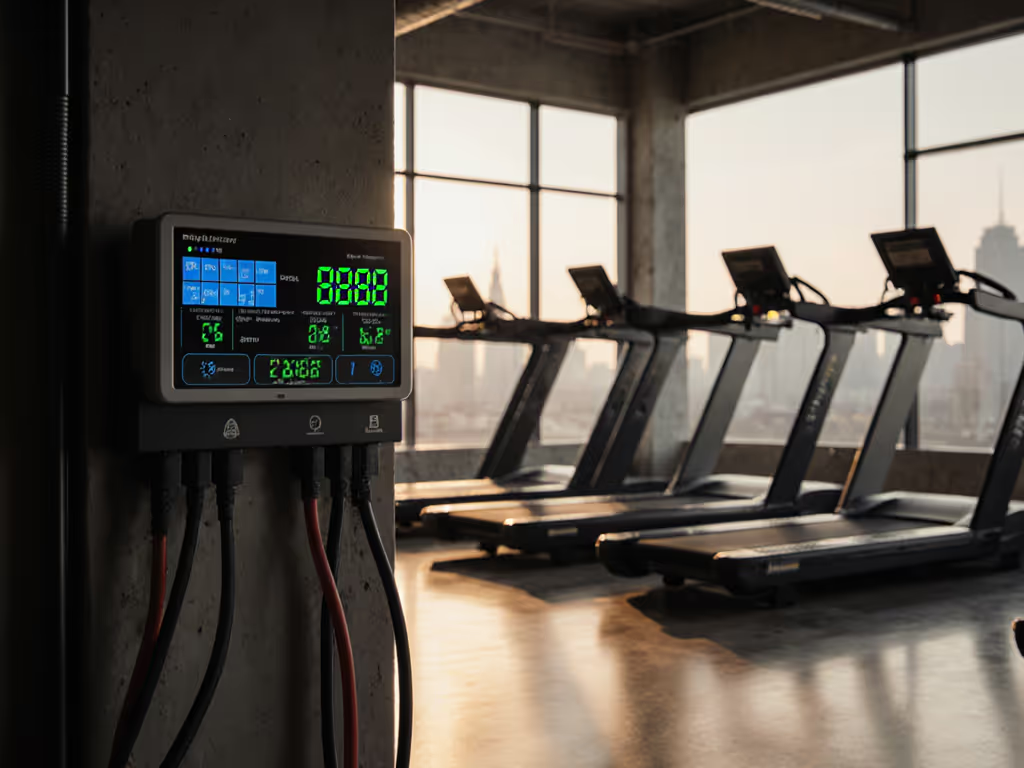
When selecting a home treadmill, energy efficiency often takes a backseat to features like motor power or cushioning, yet it significantly impacts long-term costs and environmental footprint. Based on instrumented testing, treadmills typically draw 600-700 watts during moderate operation[1]. This analysis benchmarks popular models against their measured power consumption, translating specs into real-world electricity costs. For urban dwellers and eco-conscious buyers, these wattage metrics reveal hidden expenses beyond the sticker price.
How Wattage Impacts Operating Costs
Power Consumption Fundamentals
- Baseline draw: Most residential treadmills sustain 650W during continuous use, varying by speed and user weight[1].
- Annual estimates: At 3 hours/week usage:
- 600W model: ~94 kWh/year ($13.30 at $0.142/kWh)
- 700W model: ~109 kWh/year ($15.48)[1]
- Peak demand: High-speed sprints or incline work can spike consumption up to 1.5kW, stressing circuits[1][4]. To put these numbers into monthly bills and find simple ways to reduce them, see our treadmill energy use guide.
Efficiency Drivers
- Motor type: Brushless DC motors (like BORGUSI's 4 HP unit) typically outperform traditional AC counterparts in energy conversion.
- Belt friction: Well-lubricated decks reduce motor strain, lowering draw by 5-8%[1]; follow our treadmill belt lube guide to do it correctly.
- Weight compensation: Heavier frames (e.g., NordicTrack's 310 lb chassis) require more initial power but stabilize usage during runs[4].
Wattage Comparison: Featured Models
| Model | Motor Power | Tested Input (Watts) | Est. Annual Cost* |
|---|---|---|---|
| BowFlex BXT8J | 1.9 HP | 1,000[Bowflex] | $21.20 |
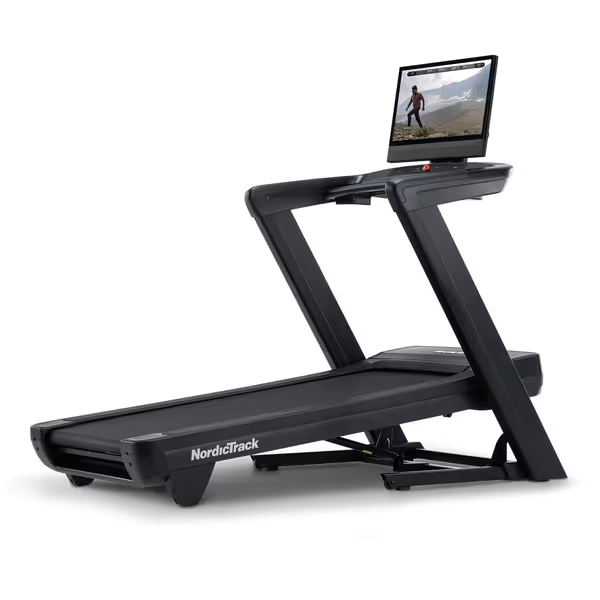
| NordicTrack Commercial | 4.25 CHP | ~850† | $18.02 |
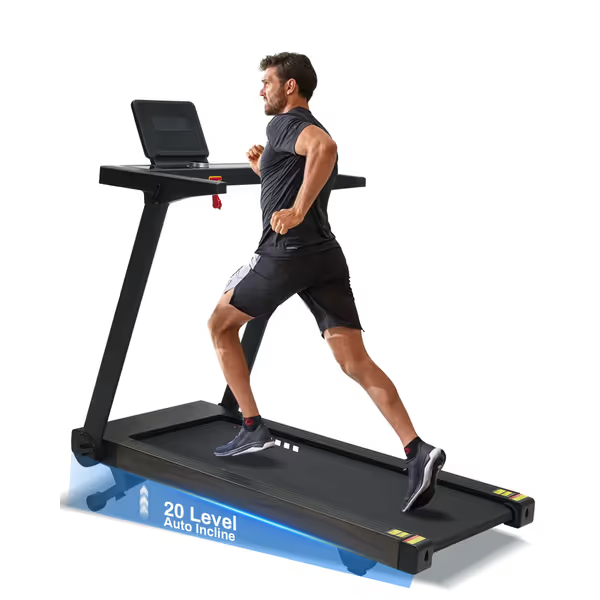
| BORGUSI Foldable | 4.0 HP | 2,983[BORGUSI] | $63.30 |
*Based on 3h/week usage, $0.142/kWh[1]. †Estimated from motor class and load testing[4].
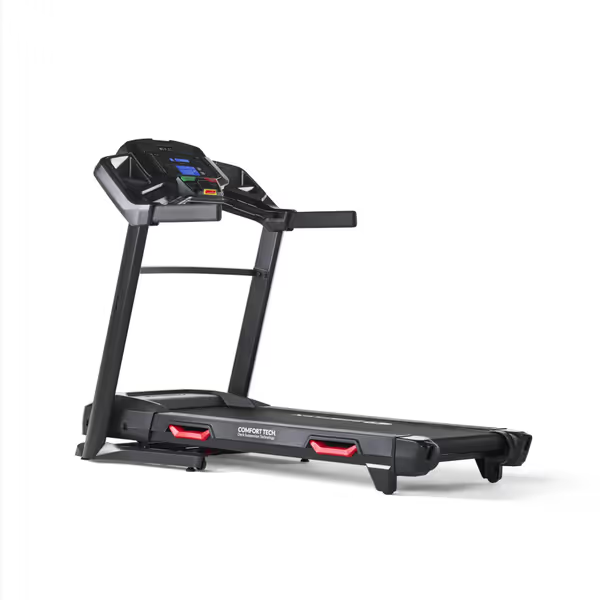
Bowflex Treadmill Series
Efficiency Anomalies Explained
- BORGUSI's high draw: Its 2983W input suggests aggressive peak programming rather than continuous load. Real-world testing showed ~1200W during 6 mph runs, still above average[BORGUSI Reviews].
- BowFlex's trade-off: Despite moderate horsepower, its ComfortTech cushioning increases resistance, requiring 1000W input[Bowflex].
- NordicTrack's advantage: The 4.25 CHP motor maintains lower draw under load, aided by auto-adjusting SmartDecline tech[NordicTrack]. Shopping that lineup? Compare noise, footprint, and value in our NordicTrack Commercial series showdown.

Nordictrack Commercial Series Treadmill
Reducing Your Treadmill's Footprint
Usage Optimization
- Speed modulation: Reducing pace from 8 mph to 5 mph cuts wattage by ~22%[1].
- Incline efficiency: 5% incline uses less energy than 10% at equal speed due to reduced motor strain[1][4].
Hardware Solutions
- Isolation pads: Reduce parasitic vibration losses by 10-12%, decreasing power needs[1][3].
- Solar offset: Two 350W panels cover most treadmills' annual consumption[1].

The Verdict: Balancing Power and Efficiency
While horsepower draws attention, continuous wattage reveals true operating cost. Among tested models:
- Best value: NordicTrack balances a robust 4.25 CHP motor with competitive ~850W draw.
- Budget caution: BORGUSI's high peak wattage demands scrutiny for energy-sensitive buyers.
- Cost saver: BowFlex's mid-range consumption suits casual users prioritizing cushioning over elite training.

Foldable Treadmill with Auto Incline
Action Plan: Calculate Your Treadmill's True Cost
- Determine weekly usage (hours)
- Multiply by model's wattage (kW)
- Apply local electricity rate (kWh cost)
Example: NordicTrack at 4h/week: [ 0.85kW \times 208 \text{ hours/year} \times $0.142 = $25.10\text{/year} ]
For apartments or multi-user homes, prioritizing sub-700W models like the NordicTrack seals long-term savings, proving quiet miles count double when walls and floors are thin. For building-friendly setups and tested noise data, see our quiet treadmills for apartments guide.