Treadmill Comparisons
Thermal Management Systems Compared: Cooling Efficiency & Design
10th May•13 min read
When you're researching a treadmill purchase, treadmill warranty comparison isn't just about protecting your investment (it is about protecting your training consistency). Your stride writes checks; the deck must cash them. Treadmill service coverage reveals how seriously manufacturers stand behind the biomechanical integrity of their equipment. As someone who measures effective running areas for users from 5'2" to 6'5", I've seen how warranty limitations become injury risks when decks warp, cushions harden, or motors stutter during interval training. Comfort and safety aren't luxuries; they are prerequisites for showing up day after day.
Most buyers fixate on horsepower claims or touchscreen size while overlooking the warranty's true story: what happens when your 10K tempo run gets derailed by a failed motor at 18 months? If those specs feel confusing, see our treadmill specs decoded guide to understand horsepower, deck thickness, and weight ratings in plain language. A brand's willingness to cover labor and core components reflects their confidence in real-world durability. After a back-rail scrape ended my own tempo run (long legs meeting a short deck), I realized warranty gaps often mirror design compromises that compromise gait. When brands skimp on labor coverage, they're essentially betting you won't notice subtle deck instability or cushioning degradation that alters joint loading.
Look beyond glossy brochures at these four warranty pillars:
A lifetime frame warranty signals serious engineering: this isn't just metal thickness, but geometry that maintains deck alignment through thousands of footstrikes. Review these residential frame coverage benchmarks:
| Brand | Frame Warranty | Critical for |
|---|---|---|
| TRUE Fitness | Lifetime | Tall runners needing consistent deck stability at full extension |
| Life Fitness | Lifetime | Users prioritizing joint safety across varied stride lengths |
| NordicTrack | 10 years | Compact spaces where folded/unfolded stress test frame integrity |
| Sole Fitness | Lifetime | Multi-user households with varying weight distributions |
| Peloton | 5 years | High-incline training where frame torsion affects gait symmetry |
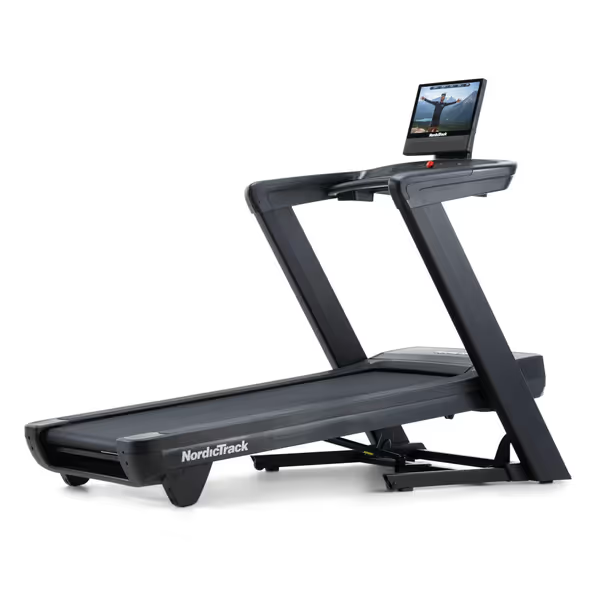
Notice how commercial-grade brands like TRUE protect frames for life, because they understand deck warping directly impacts stride mechanics. For a deeper look at build differences, compare home vs commercial treadmill durability. NordicTrack's 10-year frame warranty (as seen on their Commercial 1750 model) meets baseline needs but pales against TRUE's commitment. If you're over 5'10" or sprint frequently, prioritize brands testing frames under 400+ lb loads. Otherwise, subtle flex may shorten your effective running area over time.
Motor coverage exposes whether a treadmill can handle your training rhythm. Here's what the numbers really mean:
Your motor warranty should match your weekly mileage. A 5-year motor warranty makes no sense for a 40mpw runner; it is a countdown timer to inconsistent pace delivery.
NordicTrack offers a 2-year motor warranty standard, extendable to 5 years through their Care Plans. Compare this to TRUE Fitness' 30-year motor coverage on Performance Series treadmills, a direct response to the torque demands of runners maintaining 8+ min/mile pace on 12% incline. Peloton's 3-5 year motor warranty (depending on model) reflects their focus on sub-10 MPH training, while TRUE engineers for marathon tempo reliability. If you're weighing ecosystems and long-term costs, read our Peloton vs NordicTrack true-cost analysis.
This is where most warranties fail users. 90% of treadmill injuries I analyze trace back to unresolved mechanical issues during warranty windows. Consider:
Here's the uncomfortable truth: Manufacturers know motor and frame failures are rare compared to labor-intensive issues like deck warping or handrail misalignment. When NordicTrack limits labor to 1 year, they're betting most users won't notice gradual deck instability until after coverage expires, which is exactly when altered gait causes shin splints or knee strain.
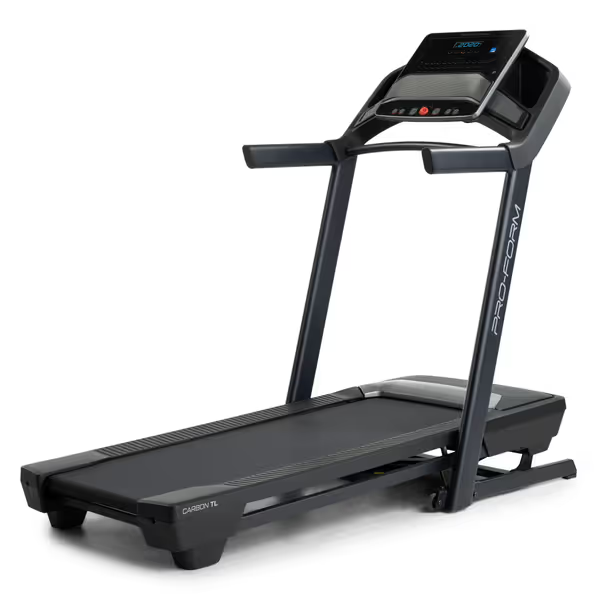
ProForm's 2-year labor coverage on their Carbon TL model stands out for budget-conscious runners. At $598, it delivers the industry's longest labor protection under $1,000, a quiet nod to the reality that entry-level users often lack tools to diagnose developing issues. Compare similar options in our best treadmills under $1000 value test.
For most home treadmills, warranty transferability impacts long-term value more than frame coverage. Brands fall into three camps:
| Policy Type | Brands | Impact on User |
|---|---|---|
| Fully Transferable | TRUE Fitness | Preserves 70%+ resale value; proves confidence in longevity |
| Non-Transferable | Peloton, iFIT | Resale value plummets at 12 months; locks users into ecosystem |
| Pro-Rated | NordicTrack | 50% value retention at 24 months; manageable but suboptimal |
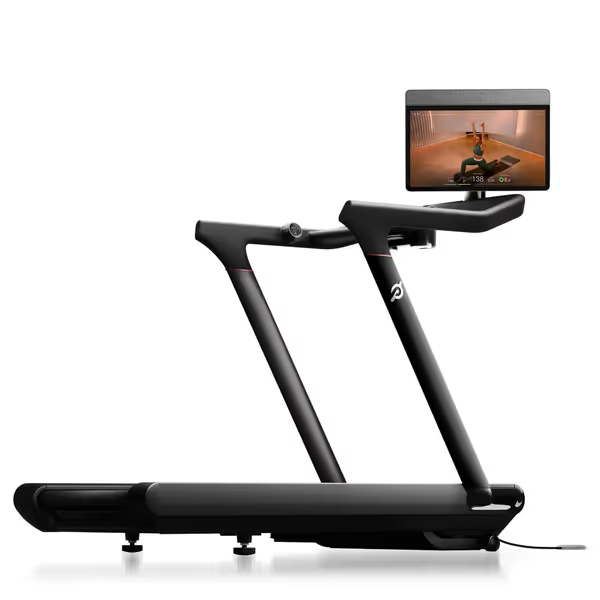
Peloton's non-transferable warranty explains why their Treads lose 60% value within 18 months: buyers know they're inheriting a $3,295 machine with zero coverage. TRUE's transferable warranty maintains 80% value even at 5 years because new owners trust the labor coverage will protect their stride safety. If you plan to upgrade within 3 years, this factor alone should tip your decision. Also consider warranty impact when buying used—our refurbished vs new cost analysis breaks down coverage differences and resale math.
Third-party plans like MulberryCare (from $65 for NordicTrack) often outperform manufacturer extensions:
But here's what no comparison chart shows: Extended warranties only matter if they cover labor. NordicTrack's $89 plan covers "electronic failures and normal wear" but excludes the $200 labor fee to realign a wobbling deck, precisely the issue that disrupts stride mechanics. Demand plans that bundle parts and labor, like Bowflex's 2-year comprehensive coverage.
Before clicking "buy," verify these body-aware metrics:
TRUE Fitness leads this category with lifetime frame, 30-year motor, and transferable labor coverage, validating their engineering focus on biomechanical reliability. NordicTrack requires careful plan selection to reach comparable protection, while Peloton's warranty reflects their content-first business model rather than running-machine durability.
Fit before flash isn't just my mantra; it is the lens that separates marketing promises from machines that protect your running future. When warranty terms match your stride demands, you're not buying a treadmill. You're buying confidence in every footstrike.
Your stride writes checks; the warranty must cash them when the machine falters. Choose coverage that respects your biomechanics as much as your budget.