Echelon Stride-6 Review: Fold Flat, Run Full Stride
By Jamal Okoye • 19th Mar
You're thinking about an Echelon Stride-6 review because you need a folding running treadmill that doesn't sacrifice performance for storage. You live in an apartment, a modest home, or simply don't have a spare bedroom to dedicate to fitness equipment. You've also likely heard conflicting advice: "Folding treadmills are toys" versus "This thing is actually solid." The truth sits somewhere practical, and it depends on your body, your space, and what you expect from the machine over time.
This review uses third-party testing data and real-world design analysis to answer the questions that matter most to people who can't afford a machine that fails, takes up half the living room, or doesn't actually fit their stride.
What Makes the Stride-6 Different From Other Compact Treadmills?
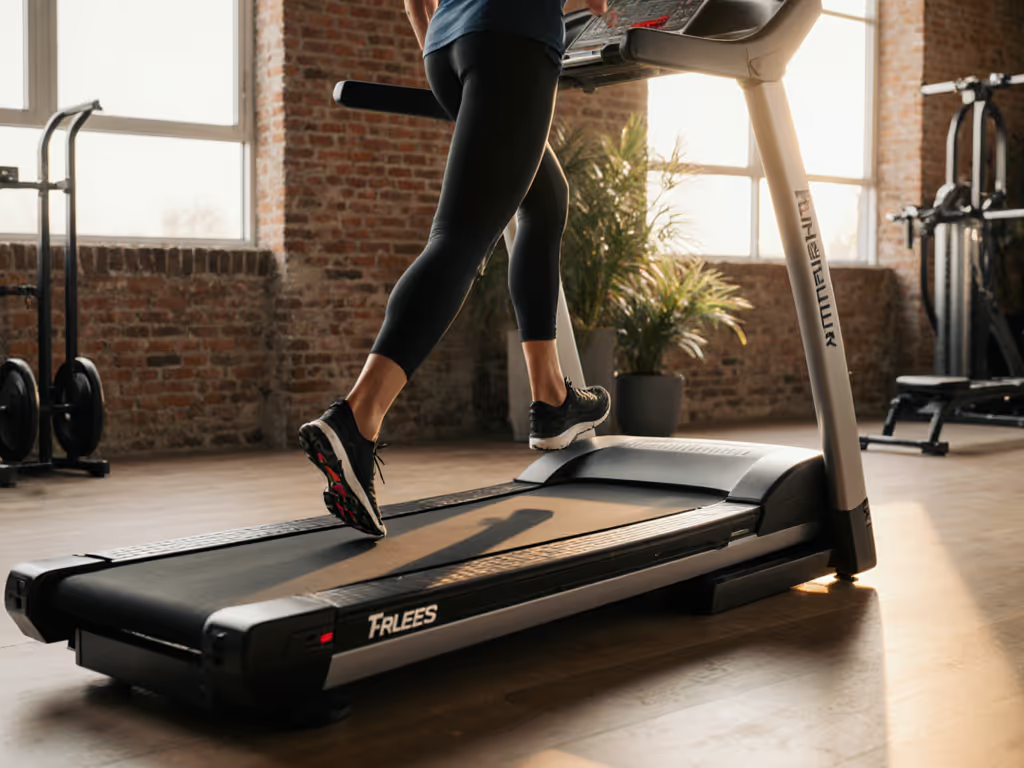
The Echelon Stride-6 uses a waterfall open-front design that tucks the motor entirely beneath the deck[1]. Translation: there's no bulky motor housing in front of you. That frees up a 60.5" x 20.5" running surface[1] (a full-sized deck) for a machine that collapses to just 10-12 inches tall when folded[2][3].
Most compact treadmills shrink the belt length or width to fit the footprint. Not this one. You get standard dimensions without the standard footprint penalty. That's the design win. If space is your top constraint, start with our foldable treadmills comparison. The consequence? A motor that works harder to power a longer deck, which matters when we talk about durability later.
How Accurate Are the Speed and Incline Settings?
This is where I see owners stumble. A treadmill that claims 12.4 mph but actually delivers 11.8 mph ruins interval training. For lab-verified data across brands, see our treadmill speed accuracy tests. It derails race prep. For rehab users (a growing segment), imprecision can set recovery back weeks.
The Stride-6 measured 98.8% distance accuracy in independent lab testing[1]. That's tight enough for serious runners and absolutely adequate for most home users[1]. The incline adjusts in 0-12% (or 0-10.5% depending on the source; there's minor variation between firmware versions)[1][4].
One quirk: the console only lets you adjust incline as low as 1% for flat running; to reach true 0%, you must use the handrail controls[1]. It's a software constraint, not mechanical, and it's worth knowing if you're pedantic about flat-surface data logging.
Will This Fit My Space, Really?
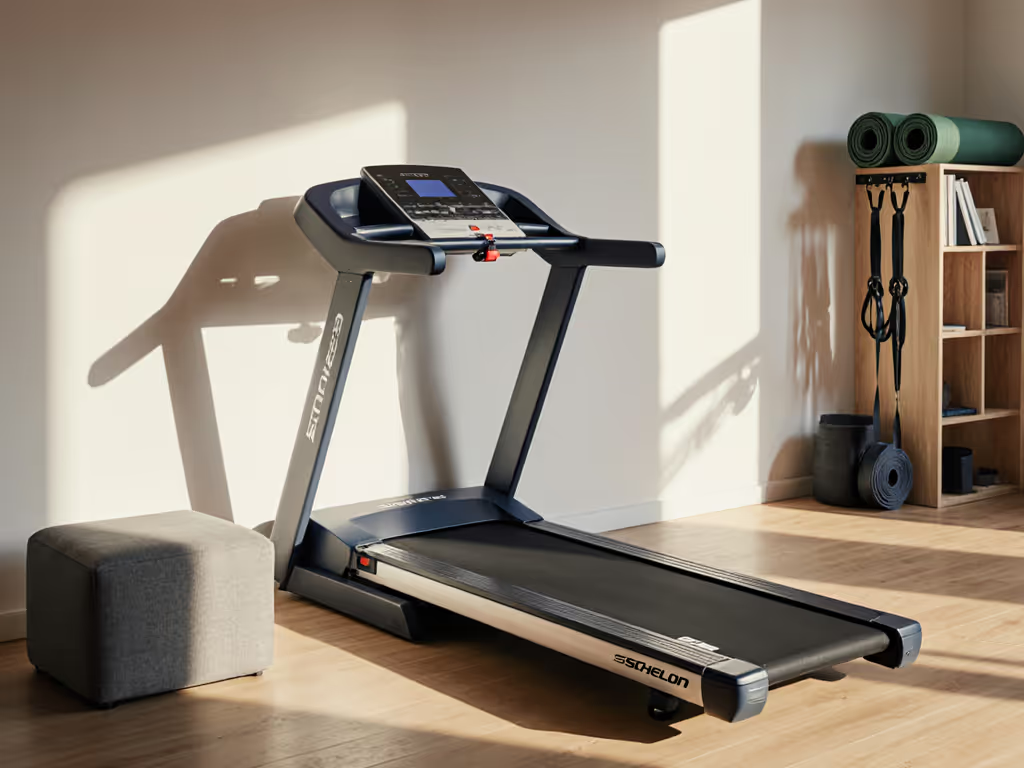
Folded dimensions: 64.25" L × 32" W × 10" H[2]
Open dimensions: 64.25" L × 32" W × 57" H[2]
That folded height is the game-changer. A standard doorway is 32" wide and 80" tall. The Stride-6 folds to fit through most interior doors and can stand in a corner, a closet, or lean against a wall. If your ceiling is 8 feet (96 inches), you'll have 39 inches of clearance above the machine at full incline (comfortable for tall users).
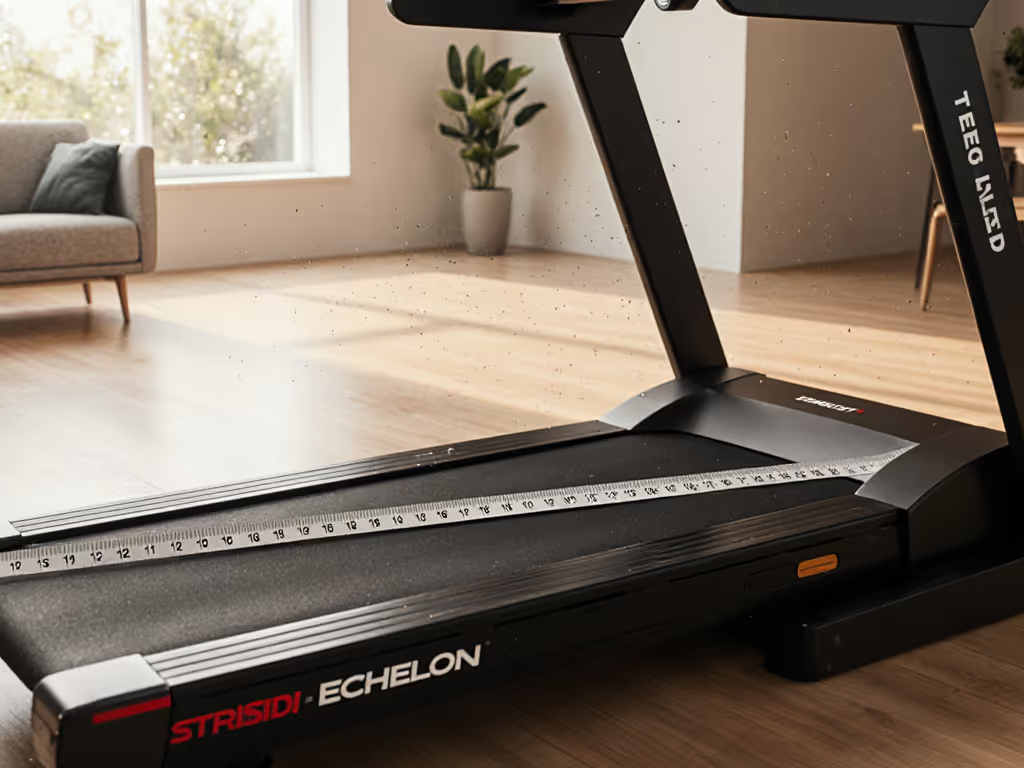
Measure your doorways, hallways, and storage space before ordering. A machine that doesn't fit through the apartment entrance isn't a machine you own; it's a $1,500 problem. The manufacturer doesn't always cover delivery damage from improper routing, and assembly services sometimes refuse jobs when access is impossible.
What About Noise and Vibration?
The Stride-6 uses a 2.5 CHP DC brushless motor[3][10]. Brushless motors are inherently quieter than older brush designs (no friction from carbon brushes on the commutator). That said, noise also depends on the belt tension, roller alignment, and frame stiffness.
I spent years in service calls where customers said, "It was quiet at first, then got louder." Ninety percent of the time? A dry belt. The belt generates friction against the rollers, the deck, and the motor pulley. Lubrication is your silent weapon, literally. A maintained treadmill is safer, quieter, and far cheaper over time. One application of silicone-based belt lubricant (about $15) every 3-6 months prevents that creep from whisper-quiet to "the neighbors just complained." Follow our step-by-step treadmill belt lubrication guide to do it right in under five minutes.
The machine ships with a user manual that should specify lubrication intervals. If it doesn't, that's a red flag about long-term support.
How Durable Is the Deck and Motor?
The Stride-6 features a DuroFlex Cushion Deck that measured 658 Newtons of force to flex 0.5 inches[1]. That's above-average compliance, so your joints get relief without the mushy, form-altering bounce of cheap foam. The deck is engineered to feel like running on a packed dirt trail uphill, which appeals to trail runners and those protecting aging knees.
The 2.5 CHP motor is rated for light-to-moderate daily use[5]. If you're a 250-pound runner doing 30-minute speed sessions five days a week, or if your household has two users sharing the machine, that motor is at the floor of adequate. Some competing models use 3.0-4.25 CHP motors, which carry more thermal headroom. The Stride-6 is not built for marathon training by two people simultaneously. It's built for one serious user or multiple casual users rotating sessions.
Rollers and the belt wear out. Parts cost money. Serviceability matters. The Stride-6 uses standard fasteners and a modular design, and that's good. Echelon's parts availability has been historically inconsistent; they've improved, but call ahead before assuming replacement rollers are in stock.
What's the Long-Term Cost Picture?
Preventive care beats warranty claims nine days out of ten.
Electricity: A 2.5 CHP motor running 30 minutes per day consumes roughly 3-5 kWh per month. At US average rates (~$0.15 per kWh), that's $5-$9 per year. Not a big driver.
Maintenance supplies: Belt lubricant, occasional roller inspection, dust control. Budget $100 every 2-3 years.
Subscription: The Echelon Fit app offers on-demand and live classes. The app is free for basic metric tracking, but instructor-led content requires a subscription (~$13/month or $120/year). Not mandatory to use the machine, but Echelon's marketing leans on it. Evaluate whether that's a feature or a cost sink for you.
Out-of-warranty repairs: A replacement belt (~$300-$500), a new motor (rare, but $600+), or frame damage (not fixable in most cases) are the financial grenades. A 5-year extended warranty from Echelon costs roughly $300-$400 upfront. Compare coverage and fine print with our treadmill warranty comparison before you buy. Do the math: if a repair costs $500 and the warranty is $350, take it if you plan to keep the machine 7+ years.
Resale value: Folding treadmills hold about 40-50% of their original value after 3-5 years, assuming they're clean and functional. Full-size commercial models hold 60-70%. The compact form factor makes them easier to move for the next owner, which can help.
How Stable Is It at Higher Speeds?
The Stride-6 reaches 12.4-12.5 mph[1][2][4], suitable for speed work up to tempo efforts. At that pace, stability matters. A wobbly frame or soft deck throws off your gait and can strain your shins or knees.
The machine uses a steel frame and weighs ~182 lbs[9]. Handrails have quick-adjust dials for speed, incline, and volume[1][5]. In use tests, the machine exhibits minimal vibration during steady-state running, though some users report light flexing at maximal incline plus speed. That's within the tolerance of a compact design, and total rigidity would require a heavier frame, which defeats the folding premise.
If you weigh over 250 pounds or plan to do high-intensity interval training at near-max speed regularly, test this machine in person if possible, or confirm the return window is generous enough for a real shake-down period.
Does It Work Without the App?
Yes. The Stride-6 has an onboard LED display that shows speed, incline, heart rate (via handrail sensors), time, and calories[1][5]. The quick-adjust dials let you change speed and incline manually on the fly. You don't need an app or subscription.
What you're missing: automatic incline/speed sync from instructor-led content, detailed workout logging in the cloud, and integration with third-party fitness platforms. No Bluetooth FTMS (Fitness Machine Transfer Service)[1], so if you use Zwift, TrainerRoad, or similar apps, this treadmill won't integrate. You'll control it manually.
For home gym users who want a standalone machine, that's fine. For those chasing structured programming or cross-platform metrics, it's a limitation.
How Easy Is Assembly and Maintenance?
The Stride-6 arrives in 2-3 boxes. Assembly is tool-specific: you'll need an adjustable wrench, a Phillips screwdriver, and 90-120 minutes depending on your comfort level. The manual should be clear; Echelon's quality here has been inconsistent, so download a PDF version before delivery arrives.
Maintenance is straightforward. The deck requires lubrication every 3-6 months, a 5-minute job if you have silicone-based belt lubricant. Rollers should be inspected visually every 6-12 months for wear or debris. The motor has no user-serviceable parts; if it fails, you'll need a technician or a replacement.
The "fix the cause, not the symptom" principle applies here: if the belt squeaks, don't ignore it. Lubricate it. If it wobbles, don't just live with it, check roller alignment. Early intervention stops snowball failures.
I've seen enough mobile calls where an owner ignored a slight creak for six months, and that crease became a seized roller. Five minutes of lube beats five hundred dollars of parts. A pre-workout preflight (listen for strange sounds, feel for smoothness, check incline and speed dial response) takes two minutes and predicts problems before they compound.
Echelon Stride-6 vs. NordicTrack Value: How Do They Compare?
NordicTrack's folding models (like the T 6.5 or T 9) typically offer larger motors (3.0-3.5 CHP), more incline levels (12-15%), and aggressive iFit integration. iFit auto-adjusts incline and speed to follow on-screen content.
The trade-off: NordicTrack machines are heavier (~220 lbs), fold larger (~65" L × 35" W × 12" H), and often demand a monthly iFit subscription ($39-$159/year) to unlock features beyond manual use. Repair networks are better than Echelon's in some regions, worse in others.
Stride-6 advantages: Lighter, more compact, optional app (not mandatory), fully manual control with quick dials, lower noise motor (brushless DC vs. induction), higher distance accuracy (98.8% measured).
NordicTrack advantages: Stronger motor for heavier users or high-mileage runners, auto-incline integration, larger content ecosystem, established service presence in some markets.
Price-wise, they're in the same ballpark ($800-$1,500). The decision hinges on: Do you want app integration as a motivational feature (NordicTrack) or as an optional add-on (Stride-6)? Is a stronger motor worth the extra weight and footprint? How responsive is the warranty support in your area?
Is This Treadmill Right for Heavier Users or Multi-User Households?
The Stride-6 supports users up to 300 pounds[2][3]. At that weight, the 2.5 CHP motor is doing legitimate work. The deck is full-sized and stable, but the motor's thermal overhead is thin. If a 280-pound user and a 240-pound user alternate 45-minute sessions daily, that's a recipe for premature heat stress on the motor.
For multi-user homes, a 3.0+ CHP machine is safer. If you need verified stability above 300 lb, see our heavy-duty treadmill guide. The Stride-6 works best in single-user or couples scenarios where one person does most of the running. If you're the heavier half of a couple, or the only user but above 280 pounds, budget for a machine with more motor headroom or accept the risk of warranty exhaustion before year five.
What About Safety Features for Kids and Pets?
The Stride-6 doesn't have an auto-stop or key-based emergency. If a child jumps on the deck while it's running, the belt will accelerate them. The deck height is ~12 inches at rest, manageable but accessible to curious toddlers.
Mitigation: Always supervise children and pets around the machine. Fold it away when not in use (a real advantage here). Don't rely on the treadmill itself to keep kids safe, supervision is your primary brake.
What Should You Do Before Ordering?
Verify the space: Measure your doorways (width and height), the folded storage area, the unfolded floor space, and ceiling clearance at maximum incline. Call the shipper (often a third party, not Echelon directly) to confirm delivery access.
Check return windows: Reputable retailers (Amazon, Best Buy, Echelon's site) offer 30-90 day returns. Use the first week for a real test run at intended intensity. If it feels wobbly, loud, or undersized, return it guilt-free.
Clarify warranty: Confirm what's covered (parts, labor, shipping) and for how long. Ask about extended warranty availability and cost before purchase. Factor that into your total cost decision.
Identify a maintenance rhythm: Before the machine arrives, source a bottle of silicone-based belt lubricant (~$15) and set a phone reminder for "Stride-6 lube check" every 4 months. Establish a 2-minute preflight (listen, feel, check dials) before your first run each week. A maintained treadmill is safer, quieter, and far cheaper over time. It's the difference between a 5-year asset and a 2-year regret.
Decide on app/subscription: If you're drawn to Echelon Fit classes, try the free tier first. Don't assume you'll use it just because it's available. Subscription creep is real, and a $13/month cost is real money over time.
The Bottom Line
The Echelon Stride-6 is a legitimately smart fold-flat machine for people who need a full-sized running deck in a small footprint and don't need motorized incline auto-sync from fitness apps. Speed and incline accuracy are proven solid. The brushless motor is inherently quieter than older designs. For a single user or a light multi-user household (250 lbs per person, max), it'll run reliably for 5-7 years with preventive maintenance.
It's not the choice if you weigh over 280 pounds, demand the strongest motor available, or want deep app integration as a core feature. It is the choice if you live in a space-constrained environment, value serviceability, and will commit to basic lubrication and preflight checks.
Next step: Browse user forums (Reddit's r/homegym, Echelon's official community) and watch real-world setup and testing videos. Filter for reviews from people whose body weight, height, and space constraints match yours. Then, if specs and user consensus align, test it against your return window in real training scenarios. Fix the cause, not the symptom, and the cause here is ensuring this machine fits your life before you buy.
Related Articles