
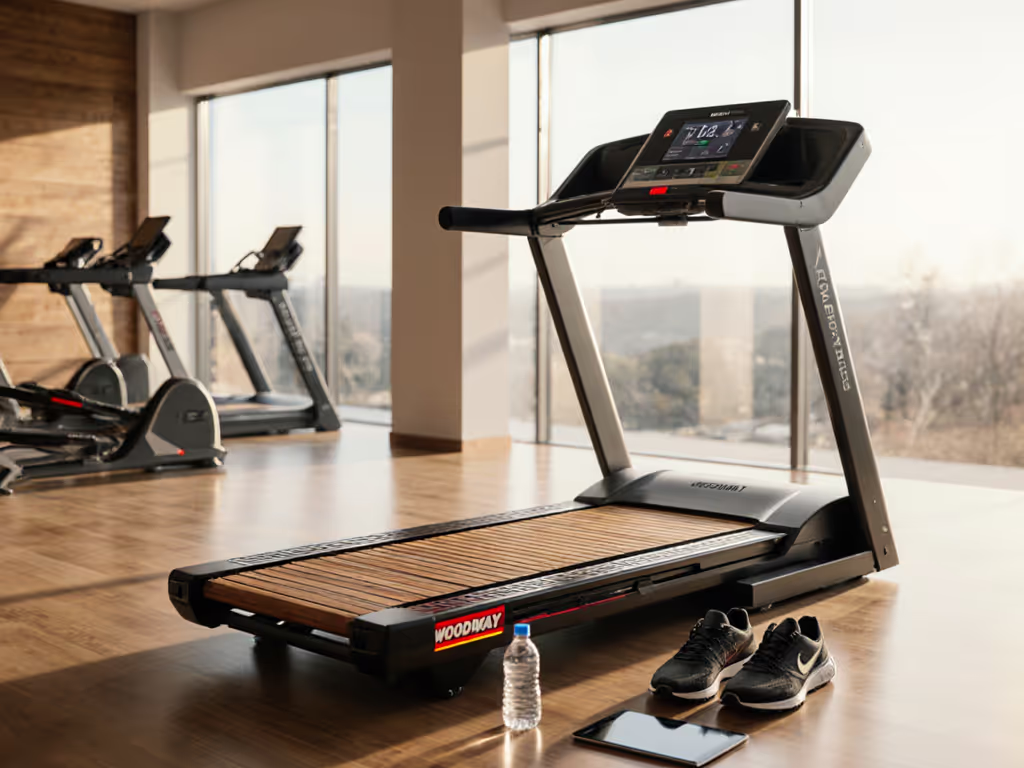
TrueForm Trainer Review: Building Better Form
By Rina Patel • 3rd Mar
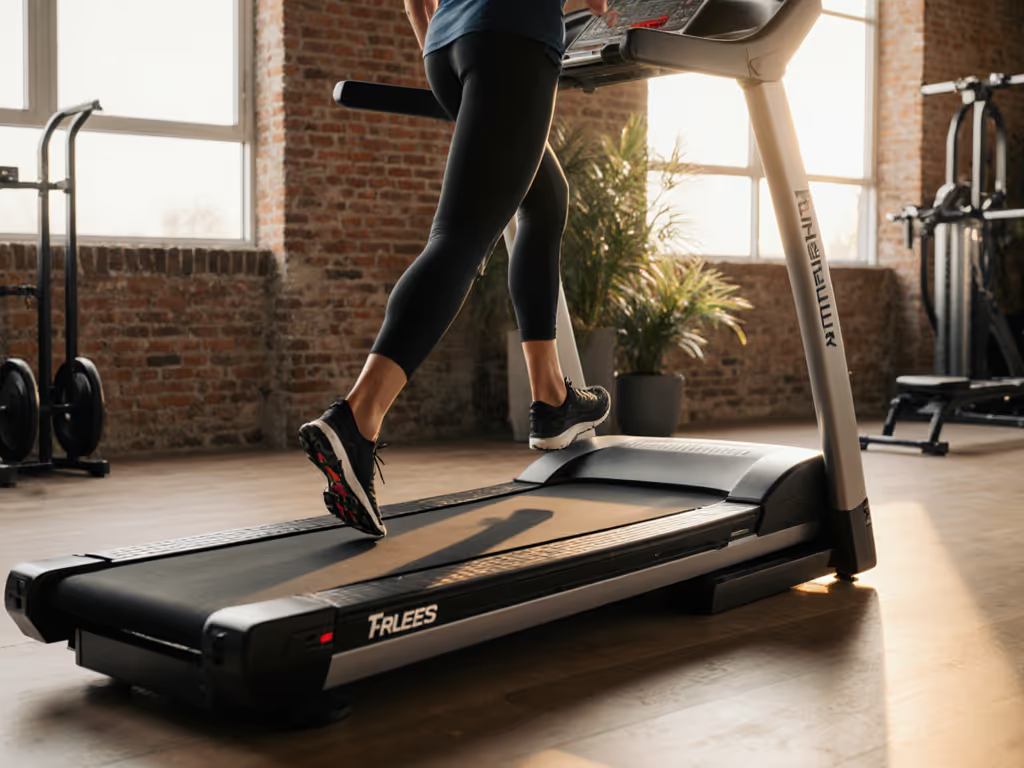
When I evaluated my first budget treadmill years ago, the numbers told a different story than the marketing brochure. The belt glazed in 300 miles, the deck softened unevenly by month six, and when the hum from worn bearings finally quit, I was already pricing replacements. I logged every service hour and parts cost (spreadsheets that taught me the real price of ownership compounds with every mile). That lesson stuck: the best treadmill is the one you can maintain, afford to run, and resell.
The TrueForm Trainer manual treadmill arrives with a fundamentally different premise than motorized machines, and that changes the cost and durability math. No motor means no power draw, no servo calibration drift, and no costly repairs to brushes or controllers. But that freedom comes with a trade off: you are the motor, and the machine's design either amplifies your effort or punishes it. Let me walk through what the numbers actually show.
What the TrueForm Trainer Actually Is
The Trainer is a non-motorized, self-powered treadmill built on a curved running surface. That curve is critical: it's engineered to be the shallowest on the market, producing the sensation of less than a 2% grade. Compare that to most manual treadmills, which feature steep curves that demand constant gravitational assistance to keep the belt rolling, and your legs working much harder than they would outdoors.
The frame is steel, wrapped in reinforced polymer. The tread surface is molded thermoplastic elastomer. Weight capacity sits at 400 pounds. The running deck is 54 inches long by 17 inches wide, and the machine weighs approximately 300 pounds (substantial and stationary by design).
For display, you get an LCD console powered by AA batteries. No rechargeable packs hiding under the deck, no Bluetooth out of the box (though newer models support Bluetooth connectivity to heart rate straps and fitness apps like Zwift and Strava). You can log distance, pace, speed, and time. There's no calorie counter. The console activates when you start running and stays out of your way.
Price sits around $2,995 depending on retailer and configuration, with a 5 to 10 year frame warranty depending on where you source it.
The Form Question: Biomechanics and Shallow Curve
Let's address the headline claim: does a shallower curve actually improve running form? The short answer is yes, but with caveats.
A steep curve forces you to meet a demand: keep the belt moving or it stops. That's urgent. Your stride pattern changes, you tend toward a more aggressive midfoot or even heel strike to generate momentum quickly. Repeat that pattern for miles, and you're training a different neuromuscular pathway than you'd use on flat ground or outdoors. For a deeper breakdown of how treadmill mechanics compare to road running, see our treadmill vs outdoor biomechanics guide.
The Trainer's shallow curve (engineered to feel like you're running on a slight incline rather than a hump) reduces that urgency. You don't fight gravity as hard. That means less compensation, less braking force at landing, and more room to find a natural midfoot strike without the machine forcing your biomechanics. One independent tester running the Trainer consistently over months reported noticeably improved midfoot strike patterns when returning to outdoor running.
But here's the pragmatic caveat: form improvement depends on your intent. If you step on the machine and immediately hammer the speed to 8 mph, the curve helps you avoid the worst postural compensations. If you treat it as a recovery tool at 4 mph, the benefit is marginal. The Trainer doesn't fix poor form; it removes one source of poor form. You still have to run deliberately.
Ownership costs compound, good design pays dividends every mile.
Durability Architecture: Parts That Matter
Here's where Rina's spreadsheet comes into play. A manual treadmill fails differently than a motorized one, and understanding those failure points is essential to evaluating long-term cost.
Bearings and Rollers
The Trainer uses 112 sealed steel ball bearings. That's not a marketing number, sealed bearings mean no lubrication maintenance, which is a genuine advantage over older manual machines where you'd need to oil the roller shafts every 50 to 100 hours. Sealed design reduces friction and extends service life, typically 3,000 to 5,000 miles before any degradation becomes noticeable.
The rollers themselves are injection-molded polymer. Polymer rollers are lighter and quieter than machined steel, but they're softer and wear faster under heavy load or misalignment. At 400 pound capacity and multi-user households, you're banking that those bearings stay sealed and the rollers track straight. If a user lands heavily on the edge of the belt repeatedly, you can see wear asymmetry within 6 months.
Tread Surface and Belt
The running surface is molded thermoplastic elastomer, a single solid piece, not a removable belt. That's significant. You can't replace just the belt. If the surface glazes (hardens and becomes slippery from sweat, friction, and UV if stored near a window), you're looking at a refinishing service or, worst case, a replacement deck. TrueForm doesn't publish pricing for deck replacement, which is a red flag I'd clarify before purchase.
Elastomer holds up well under consistent use, but elastomer-on-elastomer friction (your shoe on the molded surface) generates heat. The material resists this better than rubber, but it doesn't dissipate heat as well either. In high-frequency use (commercial gym or multi-user household), surface temperature can exceed what the material was designed for, accelerating hardening.
Frame and Welds
The steel frame is solid. Steel doesn't fatigue like plastic, and TrueForm's engineering philosophy here is conservative (over-engineered for residential and commercial use). The 5 to 10 year frame warranty reflects that confidence. Welds are the weak point; if there's any visible crack in a weld after year 3, you're in warranty territory. After that, a re-weld runs $200 to $400 if you can find a local metal fabricator willing to work on fitness equipment.
The Cost-of-Ownership Reality
Let's model total cost over time, the metric that separates pragmatic decisions from regret purchases.
Year 1 to 2: Acquisition and Setup
- Machine: $2,995
- Delivery and setup: $150 to $300 (most retailers charge; white-glove service adds $200+)
- Foundation: if your floor can't handle the weight concentration, you may need an equipment mat ($50 to $150)
- Initial total: ~$3,200 to $3,400
Year 1 to 5: Operations
Manual machines have almost zero electricity cost, the AA battery console draws negligible power (think months of operation per battery pair, maybe $10 per year). That's a genuine advantage over motorized machines pulling 1 to 3 kilowatts per hour.
Maintenance in years 1 to 3 should be minimal: occasional inspection of bearings for noise (none expected), belt alignment check (should need zero adjustments if installed level), and superficial cleaning. No scheduled lubrication. Cost: effectively $0 if you stay on top of it. For a complete checklist to keep any treadmill running smoothly, see our treadmill maintenance guide.
By year 4 to 5, if you're running 500+ miles per year, the elastomer surface may show slight dulling or minor flattening from repeated strike zones. This is cosmetic unless you're in a humid environment, where surface degradation accelerates. Preventive: avoid water or sweat pooling on the deck (wipe down after use).
Year 5 to 10: The Middle Years
This is where manual machines earn their reputation. Sealed bearings should still be quiet and smooth. Rollers may show slight wobble if alignment has drifted, easily checked by running a hand along the edge of the belt. Correction: re-centering adjustment, a 30 minute task with a wrench.
If the elastomer surface has glazed noticeably, your options narrow: live with reduced grip (which can affect form) or pursue refinishing (estimated $500 to $1,200 if TrueForm offers it; unlikely for older models, so you're searching third-party services).
Expected cost range for this period: $0 to $800 (mostly for any alignment work or surface refinishing).
Year 10+: Secondary Market and Residual
A manual treadmill, especially one that's been well-maintained, holds resale value better than motorized machines. Why? No electronics to fail, no obsolete software, and the core mechanism (curved deck, bearings, frame) doesn't date. A 10-year-old Trainer in good condition typically resells for 40 to 55% of original purchase price, roughly $1,200 to $1,650. Compare how different brands hold their value in our treadmill resale value analysis. That's substantially better than the 20 to 30% you'd recover from a motorized treadmill of the same age.
Total cost-of-ownership over 10 years:
- Acquisition: $3,400
- Operations: ~$50 (batteries)
- Maintenance: ~$200 to $400 (realistically, if you do minor adjustments yourself)
- Resale recovery: -$1,400
- Net cost: ~$2,250 to $2,450 over a decade, or ~$225 to $245 per year
Compare that to a motorized treadmill at $1,500 with a 5 year life, a $400 motor repair in year 4, and $300 residual value: you're at roughly $1,900 for five years, or $380 per year, already more expensive per year, and you haven't hit the secondary failures that plague aging motors.
Noise, Space, and Neighbor Peace
One of the most consistent pain points for apartment dwellers: early-morning runs at 6 a.m. waking the upstairs neighbor or a sleeping partner.
Manual machines are mechanically quieter than motorized ones, no motor hum or belt motor sound. The Trainer's sealed bearings mean no squeaking or grinding. What you do hear is impact: your footfalls on the elastomer surface, the subtle thud of the curved deck absorbing force, and (if the floor or frame resonates) vibration transmission into the building structure.
On a solid ground floor, the Trainer is genuinely quiet, suitable for early mornings. On a second-floor apartment, isolation matters: a 1/2-inch rubber equipment mat helps, but the frame itself becomes a vibration source. Apartment dwellers should consult our quiet treadmill setup guide for verified dB ratings and noise isolation tactics. Some users report that running at slower speeds (4 to 6 mph) generates less shock than faster running (8+ mph), which makes sense biomechanically, you're landing with less force.
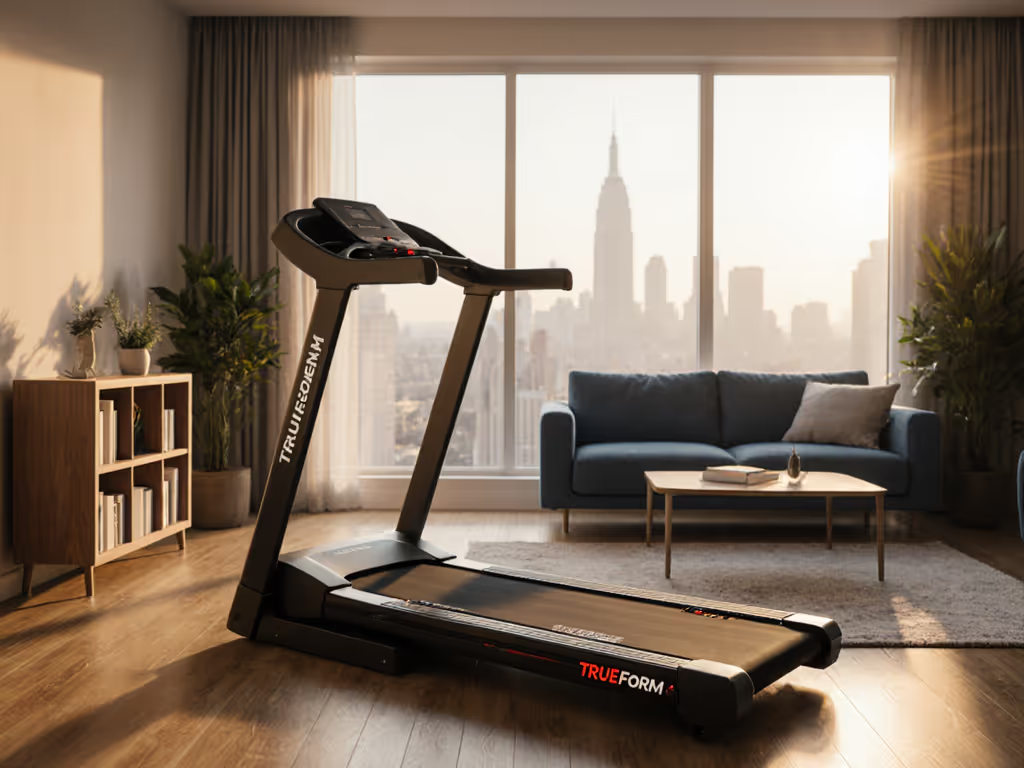
Footprint: 64 inches long by 31 inches wide. That's roughly equivalent to a queen bed. Not compact, but not absurdly large. If you need to move it to a corner or against a wall, the 300 pound weight is manageable with two people or a furniture dolly. No folding option. This is a permanent fixture in a space.
Ceiling clearance: the machine is 63 inches tall, so verify you have at least 66 to 68 inches of clear space above the center of the running surface. If your ceiling is lower, the machine still functions, but you risk bumping your head during sprint intervals.
The Serviceability Factor
Where most home gym equipment fails over time isn't in the initial purchase, it's in the ability to get parts and repair support when something goes wrong in year 6.
TrueForm has a relatively small market share compared to Peloton or NordicTrack, which means:
- Fewer third-party repair shops stock parts
- Service manual availability varies by model year
- Customer support response times can be slow during busy seasons
- Out-of-warranty repairs fall back to the manufacturer or local fabricators (if any exist near you)
Positive: since the machine has no electronics or proprietary systems, most failures are mechanical (bearing replacement, pulley swap, or frame welding), tasks any competent technician can handle. Negatives: you may need to order bearings or rollers directly, which can take 1 to 3 weeks, and TrueForm pricing for replacement parts isn't always transparent on their website.
Before committing, call their customer service line and ask: "If I need a replacement roller or bearing set in year 7, what's the cost and lead time?" Their answer will tell you how serious they are about long-term ownership.
Bluetooth and App Integration
Newer Trainer models support Bluetooth connectivity to FTMS (Fitness Machine Translation Service) apps like Zwift, Strava, and others. That's genuinely useful if you train indoors and want structured workouts or community features.
The caveat: on a manual machine, the app sees your effort (speed, distance, time), but it can't adjust resistance or incline because there's no incline and no motorized resistance. Apps like Zwift work by simulating hills and resistance changes, which makes less sense on a manual treadmill. You manually slow down or speed up to match the virtual elevation, which is clunky.
Strava and simpler logging apps work better: they just record your run as data. If that's your use case, the Bluetooth is a nice to have. If you're expecting Peloton-style interactive coaching, this machine will disappoint.
Who Should Buy the TrueForm Trainer
Ideal fit:
- Solo runners or couples who log consistent mileage (500+ miles per year) and plan to use the machine 5+ years
- Users prioritizing natural running form and lower-impact mechanics
- Apartment dwellers on solid ground floors where vibration isn't a neighbor issue
- Buyers who can commit to moderate maintenance (cleaning, occasional alignment checks) and want to repair issues themselves or with local help
- Performance-minded athletes training for endurance events who want a low-electricity, low-tech environment
Poor fit:
- Multi-user households (3+ people) where the elastomer surface and rollers face high-frequency wear
- Users in second-floor apartments or condos with sound or vibration concerns
- Buyers expecting smart features, on-screen coaching, or entertainment integration
- Those unwilling or unable to troubleshoot mechanical issues or coordinate repairs
- Users with mobility constraints who need motorized incline for rehab or walking at consistent grades
The Bottom Line: Ownership Costs Compound
The TrueForm Trainer is a pragmatic, low-hype machine built on the premise that simplicity and durability outlast features. It removes the single biggest failure point of motorized treadmills (the motor itself) and replaces it with sealed bearings and elastomer that resist wear under normal use.
What you pay for is longevity and low operational cost, not entertainment or cutting-edge coaching. The curve supports better form if you're intentional about how you run. The lack of power draw means you're genuinely self-powered, a concept that appeals philosophically but matters more on your electricity bill if you're running 10+ miles per week.
The real question: do you plan to keep this machine for 10 years, run 500+ miles annually, and maintain it consistently? If yes, the Trainer's total cost-of-ownership and resale value make it a defensible choice. If you're upgrading in 3 to 5 years or expecting flashy features, a cheaper motorized alternative might suit you better, even if it costs more over time.
Your Next Step: Validate the Fit
Before ordering, take these three actions:
-
Measure your space precisely: footprint (64" x 31"), ceiling clearance (63" + 5" overhead clearance), and door or stairway width for delivery. Contact the delivery service with these dimensions; confirm they can navigate your path.
-
Call TrueForm directly: ask about replacement parts pricing (bearings, rollers, elastomer refinishing), warranty scope after year 5, and their response time for support in your region. Their answers will clarify whether long-term serviceability matches your expectations.
-
Test the curve: if possible, visit a showroom (commercial gyms sometimes have one) or ask for a trial period (some retailers offer 30 day returns). Running on a curved deck feels different, and some users adjust immediately while others need a few weeks. You can't know which camp you're in without feeling it.
A treadmill that works for ten years, quiet mornings, and a resale value that actually exists, those align with pragmatic ownership. The TrueForm Trainer delivers on those promises if you understand what you're choosing: simplicity and durability over features. And in a market drowning in hype, that's increasingly rare.
Related Articles
Treadmill Reviews
TrueForm Runner Review: Minimal Noise & Footprint Manual Treadmill
15th Dec•8 min read